Greenpeace
Greenpeace is an international environmental campaigning network founded in Vancouver in 1971, when a small group of activists sailed toward an American nuclear test site at Amchitka. It became known for direct-action voyages against whaling fleets and French nuclear testing, weathered the 1985 bombing of the Rainbow Warrior, and now campaigns worldwide from its Amsterdam headquarters.
Sections
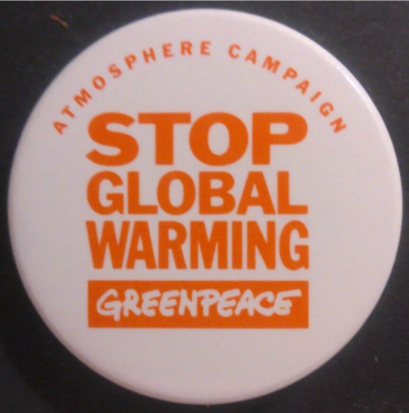
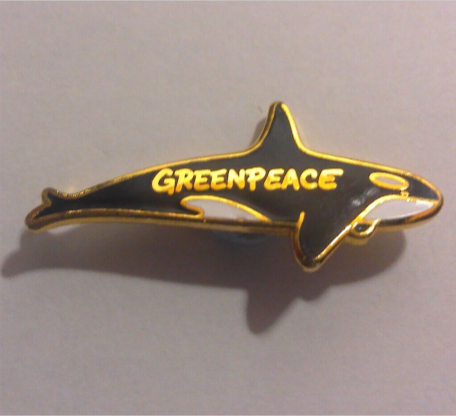
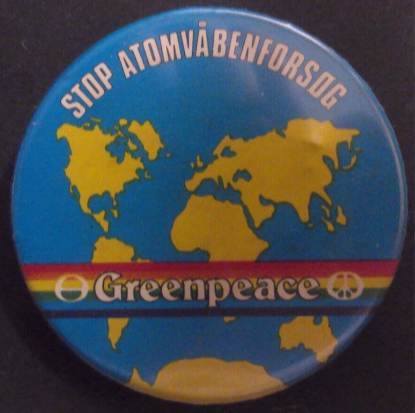
Badges
Showing 21 to 30 of 42 total badges



In numbers
2,600,000
Estimated individual regular financial supporters funding the global network worldwide.
55+
Countries across the globe where the organisation maintains physical offices.
0
Funds accepted from governments or corporations, ensuring absolute financial independence.
$660,000,000+
Damages sought in a civil suit following the Standing Rock protests.
3
Primary operational vessels currently active in the iconic global fleet.
100%
Capacity of the Rainbow Warrior III to run on wind power.
80+
Major international fashion brands pledging to eliminate toxic supply chain chemicals.
41
UK Marine Protected Areas where destructive bottom trawling was successfully banned.
60+
Countries required to ratify the historic Global Ocean Treaty into force.
Timeline
-
1971The founding voyage
The Phyllis Cormack sailed from Vancouver toward Amchitka, Alaska, to bear witness against a US nuclear weapons test.
-
1972First Mururoa confrontation
David McTaggart's yacht Vega was rammed by a French naval vessel after weeks opposing nuclear testing at Mururoa.
-
1973McTaggart beaten by French commandos
French commandos boarded the Vega and beat McTaggart, who lost sight in one eye during the assault.
-
1975First anti-whaling campaign
Greenpeace launched the world's first direct anti-whaling campaign, placing small boats between harpoons and Soviet whaling ships.
-
1979Greenpeace International formed
Scattered national offices united into Greenpeace International, based in Amsterdam, under new chairman David McTaggart.
-
1982Whaling moratorium adopted
The International Whaling Commission voted for an indefinite global ban on commercial whaling, taking effect in 1986.
-
1985Bombing of the Rainbow Warrior
French intelligence agents bombed the ship in Auckland harbour, drowning photographer Fernando Pereira before a planned Mururoa protest.
-
1995Brent Spar occupation begins
14 activists boarded Shell's disused North Sea platform to block its planned disposal in the deep Atlantic.
-
1995Shell reverses its decision
Facing boycotts and government pressure across Europe, Shell abandoned deep-sea disposal and chose onshore dismantling instead.
-
2013The Arctic 30
Russian commandos seized the Arctic Sunrise after activists boarded a Gazprom platform, detaining 30 crew for months.
-
Present dayOngoing climate campaigning
Greenpeace continues campaigning worldwide on climate change, plastics, deforestation and ocean protection across more than 50 countries.
Brief history
Before Amchitka (1969 - 71)
In Vancouver at the turn of the 1970s, a loose alliance of Quakers, pacifists and ecologists began meeting. Their aim was narrow and urgent, to stop a planned American nuclear test at Amchitka, an island in Alaska's Aleutian chain.
They called themselves the Don't Make a Wave Committee. Irving Stowe, one of the founders, introduced the group to the Quaker tradition of bearing witness, the belief that simply being present at a wrong, and recording it, is itself a form of protest.
The founding voyage (September 1971)
Money for a boat came from an unlikely source, a benefit concert at Vancouver's Pacific Coliseum on 16 October 1970, where Joni Mitchell, James Taylor and Phil Ochs performed to a sell-out crowd.
On 15 September 1971, the fishing boat Phyllis Cormack, its bridge painted with the word Greenpeace, sailed from Vancouver toward Amchitka. A US Navy vessel intercepted the crew before they reached the test site, and the bomb was detonated regardless.
The voyage failed in its immediate aim, but its blend of small boats, big cameras and total conviction became the organisation's defining method, one it would use again and again in the decades that followed.
The voyages to Mururoa (1972 - 74)
Attention soon turned to French nuclear testing at Mururoa, a Pacific atoll in French Polynesia. In 1972, Canadian businessman David McTaggart sailed his yacht Vega into the test zone and held his ground for weeks before a French naval vessel rammed it.
He returned in 1973. This time French commandos boarded the Vega and beat him severely, costing him the sight in one eye. Smuggled photographs of his injuries, published worldwide, undercut the French government's claim that the incident had been a rescue.
France ended atmospheric testing at Mururoa in 1974, moving its remaining tests underground.
The whaling campaign (1975 - 82)
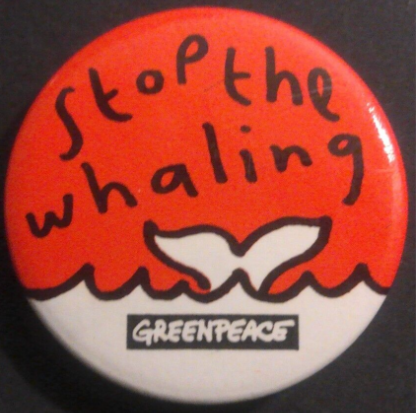
In April 1975, Greenpeace launched the world's first direct-action campaign against whaling, sending inflatable boats to place themselves between harpoons and a Soviet whaling fleet in the North Pacific.
Grainy footage of activists dodging harpoon fire, broadcast around the world, turned public opinion decisively against commercial whaling. The tactic became known as a 'mind bomb', a striking image built to travel further than argument alone.
Momentum built through the rest of the decade. In 1982, the International Whaling Commission voted for an indefinite global moratorium on commercial whaling, which took effect in 1986.
The Rainbow Warrior (1985)
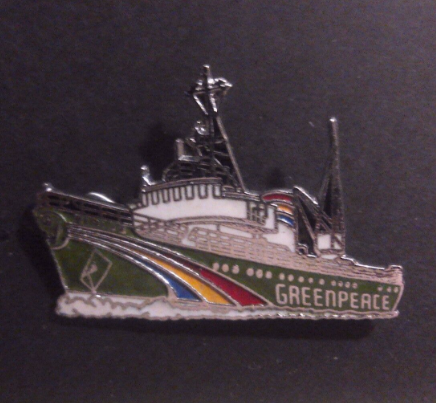
By 1985, Greenpeace had unified its scattered national offices into Greenpeace International, based in Amsterdam. Its flagship, the Rainbow Warrior, was due to lead a flotilla back to Mururoa to protest against French testing there.
It never left Auckland. On 10 July 1985, French intelligence agents attached two mines to the ship's hull. The first blast forced an evacuation, but photographer Fernando Pereira went back below deck for his camera equipment and drowned when the second explosion sank the ship.
France initially denied involvement. Two agents were later identified and convicted, and it later emerged that President Francois Mitterrand had personally authorised the operation. Donations to Greenpeace surged in the aftermath, funding a fleet that would carry the organisation into a new decade.
Brent Spar (1995)
By the mid-1990s, Greenpeace had widened its focus from states to corporations. In April 1995, 14 activists occupied Shell's disused Brent Spar oil platform in the North Sea, opposing the company's plan to sink it in the deep Atlantic.
Boycotts of Shell petrol stations spread across Europe, and several governments lodged formal objections. On 20 June 1995, Shell abandoned the plan and opted for onshore dismantling instead, a reversal the company's chairman later called leaving it in "an untenable position".
Independent testing later found that Greenpeace had overstated the quantity of oil left inside the platform, a detail the organisation itself came to acknowledge. The episode nonetheless became a textbook case in how public pressure could outweigh technical argument.
Into the climate era (2000s - present)
Since the 2000s, climate change has become Greenpeace's central campaign, running alongside long-standing work on plastics, deforestation and ocean protection.
Direct action against fossil fuel extraction has continued to carry real risk. In September 2013, Russian commandos seized the ship Arctic Sunrise after activists tried to board a Gazprom oil platform in the Arctic, detaining 30 crew for two months before an amnesty freed them.
More than 50 years after the Phyllis Cormack first sailed for Amchitka, Greenpeace remains what it always was, a small vessel willing to place itself between power and the thing it intends to harm.