| | by admin | | posted on 1st October 2023 | Artworks | | views 2029 | |
One Thousand Cranes is a sculpture in Seattle’s Peace Park that remembers Sadako Sasaki and the paper cranes that became a worldwide symbol of peace.
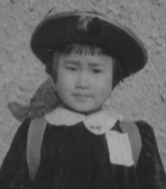
Sadako Sasaki was born in Hiroshima in 1943. When the atomic bomb was dropped on the city on 6 August 1945 she was just two years old.
Although she survived the initial explosion, radiation exposure slowly affected her health. Nearly a decade later she was diagnosed with leukaemia — one of the illnesses that became tragically common among the hibakusha, the survivors of the atomic bombing.
During her time in hospital in 1955, Sadako began folding origami paper cranes. She had learned an old Japanese legend promising that anyone who folded one thousand cranes would be granted a wish.
Her wish was simple: to live.
Sadako died on 25 October 1955 at the age of twelve. Yet the story of the cranes she folded during her illness would soon travel far beyond Hiroshima.
In Japanese culture the crane has long been associated with longevity and good fortune. Folklore holds that cranes live for a thousand years, and that folding one thousand paper cranes — known as senbazuru — brings blessings or the granting of a wish.
Sadako’s story gave this ancient legend a new meaning.
According to the most widely told version of the story, she managed to fold 644 cranes before becoming too weak to continue. Her classmates folded the remaining cranes so that one thousand could be buried with her.
Whether the exact number was 644 or many more, the cranes became a powerful symbol of hope in the face of suffering.
In the years that followed, children around the world began folding cranes and sending them to Hiroshima as a message of peace.
The Seattle sculpture stands in Peace Park, a small public space dedicated to remembrance and reconciliation.
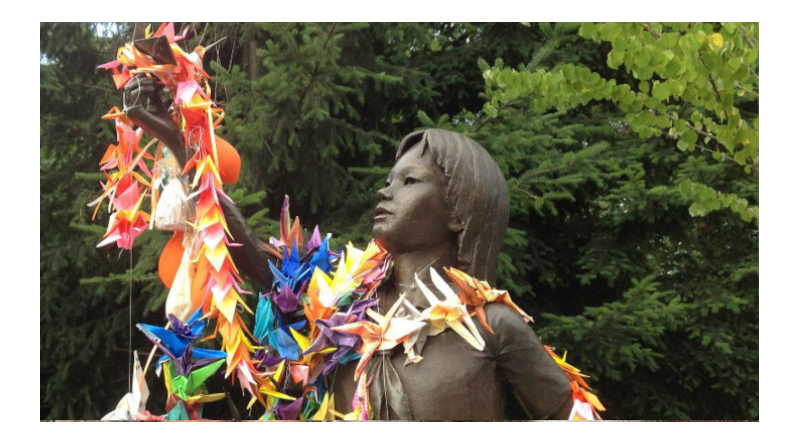
Peace activist Floyd Schmoe helped establish the park in 1990, drawing on his long connection with Hiroshima and post-war peace work. At its centre stands Daryl Smith’s bronze statue of Sadako, her arm outstretched as she holds a single paper crane.
Visitors regularly hang strings of origami cranes around the sculpture, transforming the statue into a living memorial. The delicate paper birds flutter in the wind — small gestures of hope offered by visitors from many countries.
The cranes change constantly, but the message remains the same.
Today Sadako Sasaki’s story continues to resonate across the world. Her cranes have become a universal symbol of peace and a reminder of the human cost of nuclear warfare.
At the Children’s Peace Monument in Hiroshima, thousands of cranes are still placed each year beneath a statue of Sadako holding a crane above her head. The monument bears a simple inscription that has become one of the most widely recognised peace messages in the world:
“This is our cry. This is our prayer. Peace in the world.”
The Seattle sculpture carries that same message across the Pacific.
A small bronze figure holding a fragile paper bird reminds visitors that even the quiet gestures of a child can become part of a global call for peace.