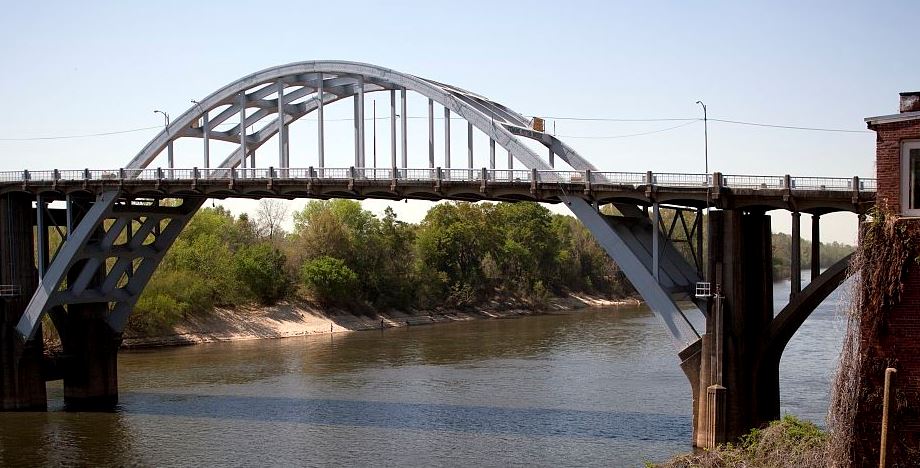

The Edmund Pettus Bridge: A name under question
The Edmund Pettus Bridge stands at the centre of a continuing debate over whether a place of civil rights memory should continue to carry the name of a defender of white supremacy.
A bridge with two meanings
Spanning the Alabama River in Selma, the Edmund Pettus Bridge is one of the most recognisable landmarks of the American civil rights movement. On 7 March 1965, it became the site of what would be known as Bloody Sunday, when peaceful marchers calling for voting rights were attacked by state troopers as they attempted to cross into Selma. Among them was John Lewis, then a young activist, who was beaten and left with a fractured skull.
The images of that day travelled across the United States, exposing the violence that underpinned segregation and helping build support for the Voting Rights Act later that year. The bridge has since become a place of pilgrimage, a symbol of nonviolent protest and the willingness of ordinary people to confront injustice in public view.
Yet this meaning sits alongside another, less easily reconciled.
The name it carries
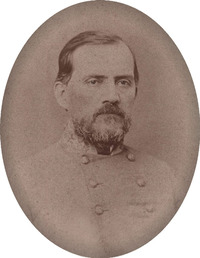
The bridge takes its name from Edmund Pettus, a Confederate general, U.S. senator, and senior figure in the Ku Klux Klan. The naming of the bridge in 1940 reflected the values of its time, when public monuments across the South often honoured those who had defended slavery and segregation.
This creates a stark contradiction. A structure now associated with the struggle for civil rights continues to bear the name of a man connected to the systems that movement sought to dismantle. The bridge holds both histories at once, without resolving them.
For some, this tension is precisely what gives the site its power. For others, it represents an injustice that remains visible in the present.
The campaign to rename
Calls to rename the bridge have circulated for decades, but they gained new momentum in 2020 following the death of John Lewis and a wider re-examination of monuments associated with racial injustice. Petitions attracted hundreds of thousands of signatures, and activists launched efforts such as the John Lewis Bridge Project, arguing that the site should honour the man who was beaten there rather than the man whose name it carries.
Supporters of renaming see it as a continuation of the civil rights struggle, extending its principles into the present. Changing the name would not erase history, they argue, but would shift what is publicly recognised and remembered.
Yet the campaign has not produced a definitive outcome. Renaming the bridge would require political agreement at the state level, and that agreement has not been reached.
History or change?
Opposition to renaming has come from a range of perspectives. Some local voices in Selma argue that the name should remain as a reminder of the past, preserving the full historical context rather than altering it. Others have suggested alternative names that move away from both Pettus and Lewis, seeking a different way to mark the site.
John Lewis himself expressed reservations about renaming the bridge during his lifetime, suggesting that keeping the name could serve as a reminder of how far the country had come. His position adds a further layer of complexity to the debate, resisting a simple resolution.
The question, then, is not only what the bridge should be called, but how history should be held in public space. Whether preserved in its contradictions or reshaped through change, the Edmund Pettus Bridge remains what it has long been: a place where the past is not settled, but continues to be argued over in the present.