Peace Pledge Union
The Peace Pledge Union is Britain's oldest secular pacifist organisation, founded in 1934 when Canon Dick Sheppard asked the public to sign a pledge renouncing war. It quickly grew into a mass movement, adopted the white poppy as a symbol of remembrance, supported conscientious objectors through the Second World War, and continues its educational campaigning today.
Sections
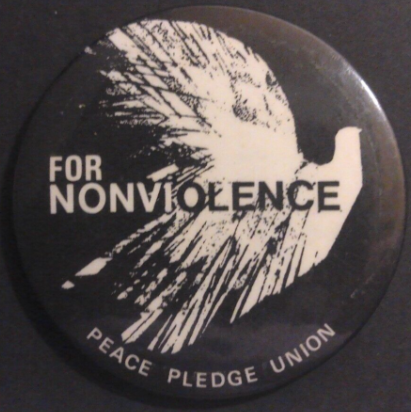
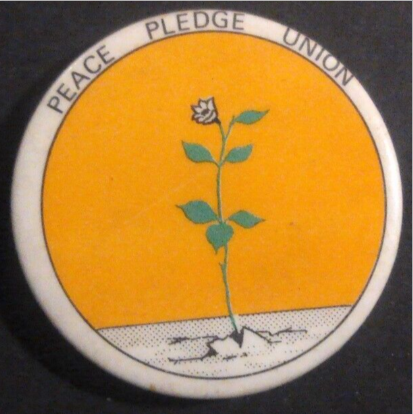
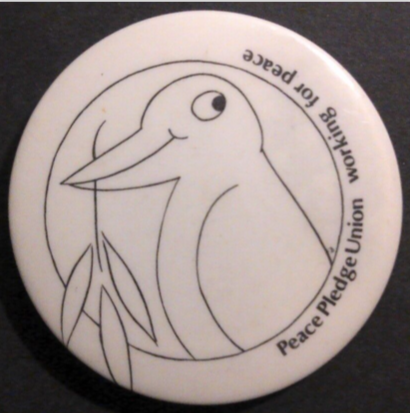
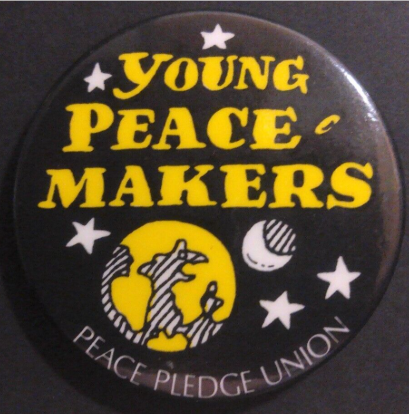
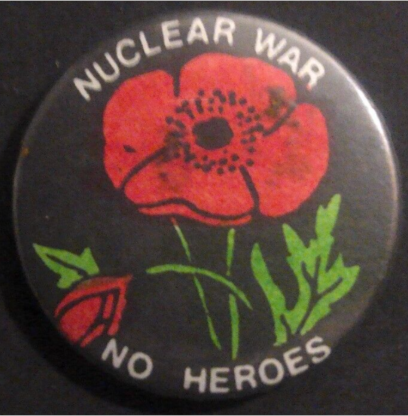
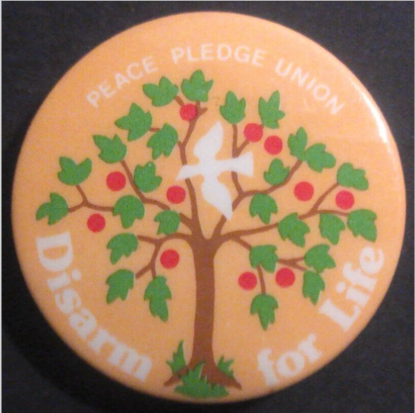
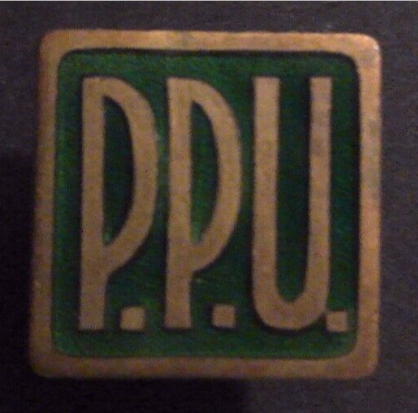
Badges
Showing 1 to 10 of 13 total badges


In numbers
1
Single postcard invitation from Canon Dick Sheppard that initiated the pacifist movement.
150,000
Pledge cards mailed in by supporters during the foundational early years.
25
Years that Peace News was distributed as the official weekly union paper.
140,000
Peak wartime membership reached in 1940 despite severe backlash against pacifism.
0
Weapons used; wartime relief efforts instead helped establish the global charity Oxfam.
98,414
Dedicated members remaining by 1945 after enduring intense social and political pressure.
90+
Years of continuous resistance and campaigning against military spending and recruitment.
20,000+
Arrested anti-war protestors in Russia supported through international solidarity fundraising.
24
Words in the modern peace pledge, matching the standard £24 annual fee.
Timeline
-
1934The peace letter
Canon Dick Sheppard published an open letter in the press, asking men to send a postcard pledging to renounce war.
-
1935Albert Hall rally
Sheppard chaired a meeting of 7,000 supporters at the Royal Albert Hall in London, inaugurating the movement.
-
1936The Union is formed
The Peace Pledge Union was formally constituted, and membership was officially opened to women.
-
1936Adopting the white poppy
The PPU took over the production and distribution of the white poppy, originally introduced by the Co-operative Women's Guild.
-
1937Death of Dick Sheppard
The founder of the PPU died. George Lansbury subsequently took over as president of the organisation.
-
1939Outbreak of the Second World War
Despite public hostility, the core of the PPU maintained its pacifist stance and focused on supporting Conscientious Objectors.
-
1940Officers prosecuted
Six PPU officers were arrested and prosecuted for publishing a poster that read: "War will cease when men refuse to fight".
-
1958The nuclear age
The PPU supported the formation of the Campaign for Nuclear Disarmament (CND), expanding its focus to oppose nuclear weapons.
-
1994Commemorating objectors
The Conscientious Objectors' Commemorative Stone was unveiled in Tavistock Square, London, with support from the PPU.
-
Present dayOngoing peace education
The PPU continues to operate as Britain's oldest secular pacifist organisation, distributing white poppies and campaigning for nonviolence.
Brief history
The letter and the pledge (1934)
In October 1934, as the memory of the First World War lingered and the threat of European rearmament grew, Canon Dick Sheppard published an open letter in the British press. He asked men to send him a postcard if they agreed with a simple, uncompromising statement: "I renounce war, and am therefore determined not to support any kind of war. I am also determined to work for the removal of all causes of war."
The intention was to gauge whether a genuine pacifist movement could be formed, testing the waters of a public still deeply scarred by the trenches. The response was immediate and overwhelming.
A growing union (1935 - 1939)
By the following year, over 100,000 men had sent postcards. This led to the formal inauguration of the Peace Pledge Union in May 1936, at which point membership was officially opened to women.
The movement quickly attracted high-profile sponsors from literary and academic circles, including Aldous Huxley, Bertrand Russell, and Vera Brittain. It established a weekly newspaper, Peace News, and built a vast network of local groups. Following Sheppard’s sudden death in 1937, the prominent Labour politician George Lansbury took over as president, guiding what had become one of the largest pacifist organisations in Europe.
Adopting the white poppy (1936)
The white poppy had been introduced in 1933 by the Co-operative Women's Guild. It was designed as a symbol of remembrance for all victims of war, civilian and military alike, and as a visible commitment to peace.
In 1936, the Peace Pledge Union took over the production and distribution of the poppies. It became a defining symbol for the organisation. It was worn not to erase the memory of the dead, but to insist that the most appropriate tribute to that loss was the active prevention of future conflict, challenging the increasingly military focus of official remembrance events.
The Second World War (1939 - 1945)
The outbreak of the Second World War presented a severe test. While a portion of the membership renounced their pledge, the core of the organisation stood firm in the face of intense public and political hostility.
The PPU focused its wartime efforts on supporting Conscientious Objectors, helping individuals navigate hostile military tribunals and providing aid to those imprisoned. The state monitored the group closely. In 1940, six PPU officers were prosecuted and fined for publishing a poster that read: "War will cease when men refuse to fight." Despite the pressure, the Union also campaigned heavily for food relief to be sent to starving populations in blockaded Europe.
The Cold War and conscription (1945 - 1980s)
In the post-war decades, the PPU faced a changed world. Its immediate focus turned to opposing the continuation of military conscription, known as National Service, which remained in place in Britain until 1960.
The advent of the atomic bomb also shifted the landscape of pacifism. The PPU campaigned against the development and testing of nuclear weapons, working alongside and supporting emerging groups like the Direct Action Committee and the Campaign for Nuclear Disarmament (CND). Throughout the Cold War, the Union maintained its absolute rejection of all war, distinguishing its broader pacifism from groups focused solely on nuclear disarmament.
Broadening the campaign (1990s - 2000s)
As the Cold War ended, the PPU directed its attention toward the mechanics of modern conflict and the arms trade. In 1994, the organisation was instrumental in unveiling the Conscientious Objectors' Commemorative Stone in London’s Tavistock Square, securing a permanent physical memorial for those who had refused to kill.
The Union was a vocal opponent of the 1991 Gulf War and the 2003 invasion of Iraq. During this period, the organisation began to focus more heavily on the concept of everyday militarism, examining how military values were being quietly normalized within civilian society.
The 21st century and peace education (2010s - present)
Today, the PPU operates as the oldest secular pacifist organisation in Britain. Much of its modern work centres on peace education and actively challenging the presence of the military in schools, as well as opposing events like Armed Forces Day.
The white poppy campaign has seen significant resurgences, particularly during the centenary of the First World War, continuing to provoke national debate about how the past is remembered. Nearly a century after a single letter asked men to renounce the battlefield, the Peace Pledge Union remains what it was built to be: a quiet, persistent refusal to accept that war is inevitable.