| | by admin | | posted on 6th April 2026 | Artworks | | views 35 | |
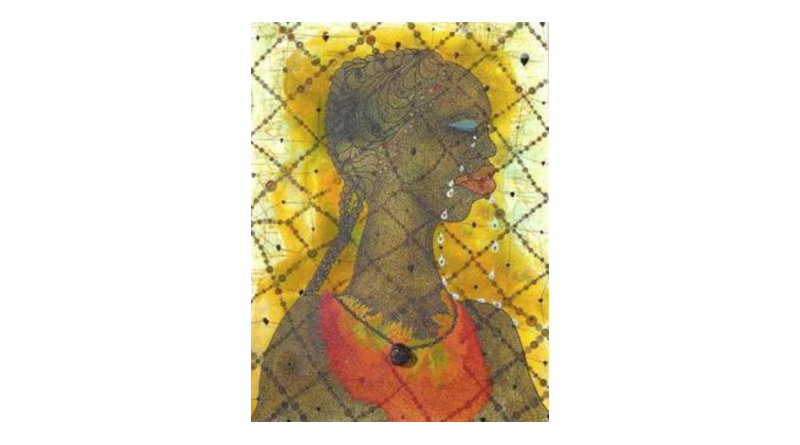
No Woman, No Cry (1998) presents a woman in tears, where each tear carries the face of a life that cannot be forgotten.

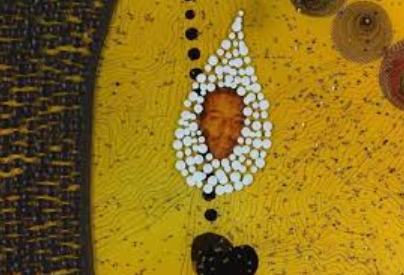
A woman's face fills the canvas, front-facing and still, her eyes closed as if holding something inward rather than releasing it. Tears fall in steady lines down her cheeks, large and deliberate, each one carrying within it a small painted face. The image is direct, almost confrontational in its scale, measuring approximately 243 × 183 centimetres, and built through layers of mixed media including oil paint, resin, glitter and map pins. The surface shimmers with colour and pattern, while the canvas rests on two rounded forms of elephant dung, lifting it physically from the ground.
The work was created by the British artist Chris Ofili in 1998. Known for combining intricate decorative surfaces with charged subject matter, Ofili brings together beauty and weight without separating the two. What we are looking at is a portrait that refuses to remain only a likeness. It holds grief in place, giving it both form and presence.
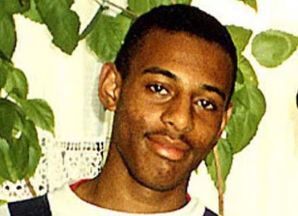
Each tear contains the face of Stephen Lawrence, a Black British teenager murdered in a racist attack in 1993. The repetition is precise. His face appears again and again, not as variation but as insistence. Grief is not a single moment here, but something that continues, returning with each movement of the eye across the surface.
The woman represented is Doreen Lawrence, his mother. Her expression does not collapse into visible anguish, but remains composed, almost held. This restraint sharpens the image rather than softening it. The title, drawn from Bob Marley's song No Woman, No Cry, introduces a note of endurance. It does not remove suffering, but acknowledges the strength required to carry it. Set against the backdrop of a failed police investigation later identified as institutionally racist, the painting holds personal loss and public injustice within the same frame.
The work operates as a form of witness. It does not offer resolution or reconciliation, but insists on recognition. The face cannot be separated from the tears, and the tears cannot be separated from the life they carry. In this way, the painting resists the quieting of memory. It refuses to allow loss to become distant or abstract. Peace is not presented here as calm or resolution, but as the refusal to ignore injustice.
Ofili's use of materials intensifies this refusal. Glitter and colour draw the viewer in, while the subject holds them there. The beauty of the surface does not distract from the violence behind it, but exists alongside it, creating a tension that cannot be resolved easily. The painting does not demand action directly, yet it makes indifference difficult to sustain.
Nothing in the image moves, yet nothing is finished. The tears continue downward, the face remains closed, and the repetition does not settle into silence. The work holds its position, neither releasing grief nor allowing it to disappear.
In that stillness, something endures. The painting offers no closure, but it does offer presence. The face remains, the memory remains, and the act of looking becomes part of what any lasting peace must carry.