| | by admin | | posted on 25th March 2026 | Individuals | | views 76 | |
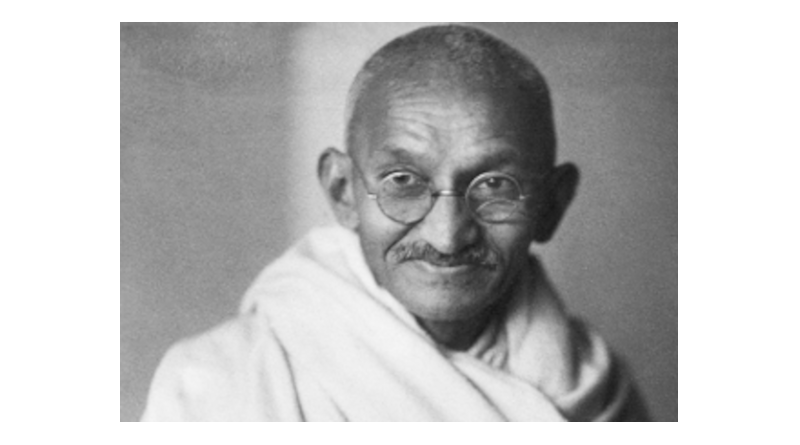
Mahatma Gandhi (1869 - 1948) transformed nonviolence into a usable method of political action by turning moral refusal into organised collective struggle.
An unlikely revolutionary, Mahatma Gandhi was born in India and trained as a lawyer, working within the structures of the British Empire rather than outside them. He studied in Britain and would return there several times, moving between imperial centre and colony rather than standing entirely apart from either. He did not command armies or organise uprisings. Yet he became one of the central figures in the struggle against imperial rule.
What makes Gandhi distinctive is not simply that he rejected violence, but that he found a way to use that refusal. He made it possible for ordinary people to confront power directly without adopting its methods.
The decisive shift came after Gandhi moved to South Africa as a young lawyer. There he encountered the realities of racial discrimination under imperial law, not as an abstract issue but as a lived experience. In one early incident, he was thrown off a train despite holding a valid first-class ticket.
What might have remained a personal grievance became something else. Gandhi began to organise collective responses, bringing people together to resist specific injustices. These early campaigns were experimental, testing what could be done without violence and what could not.
He saw that refusal alone was not enough if it remained private or isolated. It had to be made visible and shared. Resistance would be carried into the open, deliberately rather than reactively.
Gandhi gave this approach a name: satyagraha. Often translated as ‘truth-force’, it described something to be done, not simply believed.
At its centre was refusal. Unjust laws were not obeyed. Cooperation with injustice was withdrawn. But this refusal was not hidden or reactive. It was carried out openly and held within strict limits. Those who took part were expected to avoid retaliation, even under pressure.
“Nonviolence is a weapon of the strong.”
This combination changed the character of resistance. Conflict remained, but it no longer followed the same pattern. The aim was not to overpower an opponent, but to expose the conditions under which power operated.
As Gandhi’s campaigns developed, a pattern began to emerge. Resistance was no longer improvised. It followed a sequence that could be repeated.
Each struggle began with close attention to the injustice itself. How did it operate, and who did it affect? Attempts were then made to resolve the issue through negotiation. Only when these failed did action move into the open. Laws were broken deliberately, in ways that made the conflict visible.
Those involved accepted what followed. Arrest, imprisonment, and hardship were not avoided. They were faced without retaliation. This discipline held the movement together and prevented it from slipping into violence.
What emerged was not simply protest, but a structured way of organising pressure without violence.
At this point, something had changed. Nonviolence was no longer only a stance. It had become a method that could organise collective action across different struggles.
In 1930, this method took on a form that could be seen clearly. The issue was the British tax on salt, a simple substance used by everyone. Under colonial law, Indians were forbidden from collecting or producing their own salt and were required to buy it from the state. Gandhi chose it precisely because of its ordinariness.
He began to walk.
From his ashram, a simple, disciplined community where he lived and worked with his followers, he set out toward the sea, covering more than two hundred miles. As he passed through villages, others joined him. The march grew slowly, without force, carried by attention and participation. It was deliberate and impossible to ignore.
When he reached the coast at Dandi, the act itself was almost unremarkable. Gandhi bent down, lifted salt from the ground, and held it in his hand. In doing so, he broke the law. Under British rule, Indians were forbidden from collecting or producing their own salt and were required to buy it from the state, which controlled its manufacture and sale through taxation. By picking up salt freely from the shore, Gandhi openly defied this system.
Nothing dramatic happened in that moment. Yet the meaning was clear. The law had been challenged openly, and others followed. Salt was made, carried, and sold in defiance of the tax.
“In a gentle way, you can shake the world.”
The response came later. Arrests followed. Gandhi himself was imprisoned. But by then the action had already moved beyond him. What began as a walk had become a movement. The method was no longer described. It was being enacted.
The Salt March made the method visible. A small, everyday act had been turned into a direct challenge to imperial authority. It showed how power depended on cooperation, and how that cooperation could be withdrawn.
Because the action was public, it drew attention. Because it was disciplined, it resisted easy dismissal. When the authorities responded with force, the contrast became clear.
The strength of the method lay in this combination. Participation, visibility, and restraint worked together. Pressure was created without adopting the logic of violence.
Gandhi’s work did not emerge in isolation. Leo Tolstoy had argued for moral nonviolence grounded in conscience, while Henry David Thoreau had shown that individuals could refuse cooperation with unjust laws.
What Gandhi did was bring these strands into political struggle. He made them collective, organised, and public, turning moral insight into a repeatable form of action.
The method did not end with him. It was later developed and refined by figures such as Bayard Rustin and Martin Luther King Jr., who applied it in different contexts and gave it further structure.
Before Gandhi, nonviolence was often understood as a matter of personal conviction or individual refusal. After him, it became something else — a mass movement.
By bringing together moral refusal and political struggle, he showed that resistance did not have to mirror the force it opposed. It could take a different form, one grounded in discipline, participation, and a visibility that drew large numbers into action and inspired followers across the world.
Nonviolent direct action did not remove conflict. It changed how conflict could be engaged, becoming a force that could be carried into new struggles and adapted over time.