

Haywain With Cruise Missiles
Haywain with Cruise Missiles, inserts three nuclear warheads into John Constable’s famous water colour painting of the idyllic English countryside.
A landscape interrupted
Constable’s original painting is one of the most recognisable images in British art. It shows a wagon crossing the River Stour beside Willy Lott’s House at Flatford in Suffolk, with trees, water and open sky combining to create an enduring vision of pastoral calm. For many viewers, The Hay Wain has come to symbolise an idealised image of England itself.
The reworked image, by by British political artist Peter Kennard (1949 - ), breaks that calm. In place of Constable’s quiet horizon stand nuclear cruise missiles mounted on mobile launchers. The countryside appears suddenly militarised. What once suggested continuity and familiarity now feels vulnerable, as though the landscape itself has been drawn into the machinery of war.
The power of the image lies in its contrast. By placing weapons of mass destruction within one of Britain’s most cherished paintings, Kennard makes the threat feel immediate and local. Nuclear politics no longer seems distant or abstract. It arrives in a field beside a river in the middle of a scene many people think they already know.
Protest in the nuclear age
The original painting depicts the Suffolk countryside of East Anglia, while the cruise missiles being protested were also planned for bases across eastern England.
Kennard created the work during renewed Cold War tension. In the early 1980s the British government agreed to host American ground-launched cruise missiles at bases including Greenham Common and RAF Molesworth. These decisions helped spark a new wave of anti-nuclear protest and renewed the public visibility of the Campaign for Nuclear Disarmament, founded in 1958.
The image was also a response to a Ministry of Defence leaflet that attempted to reassure the public by depicting cruise missiles in delicate watercolour illustrations. Kennard found the approach disturbing. If nuclear weapons could be made to appear harmless through pastoral imagery, he believed the opposite could also be true.
“My photomontages attempt to rip apart the smooth surface of official deceit.”
By placing missiles inside a famous rural painting, Kennard turned that aesthetic language against itself. The result was both simple and unsettling: a peaceful English landscape suddenly overshadowed by the machinery of nuclear war.
Art and the culture of protest
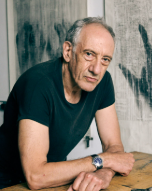
Peter Kennard, born in London in 1949, became one of the most influential political artists in modern Britain. Involved in protests during the Vietnam War era, he moved away from traditional painting and turned to photomontage, combining photographs and familiar images to produce sharp political statements.
Throughout the 1970s and 1980s Kennard’s work became closely associated with the Campaign for Nuclear Disarmament. His stark images appeared on posters, leaflets and demonstrations, helping to shape the visual identity of the British anti-nuclear movement.
Although many of the publications that once circulated these images have disappeared, Kennard’s work continues through exhibitions, books and digital archives. Haywain with Cruise Missiles was included in the 2018 exhibition Art Against War in Sheffield, marking the 60th anniversary of CND.
A familiar landscape reconsidered
More than four decades after it was created, Haywain with Cruise Missiles remains one of the most striking examples of modern protest art in Britain. By altering a painting deeply embedded in national culture, Kennard demonstrated how art can challenge habits of seeing and expose political realities often hidden behind reassuring language.
The work also reminds viewers that landscapes are never entirely neutral. Even the most peaceful countryside exists within political choices and moral questions about the future. Through one simple intervention, Kennard transformed a familiar image of England into a meditation on responsibility and the continuing search for peace.