
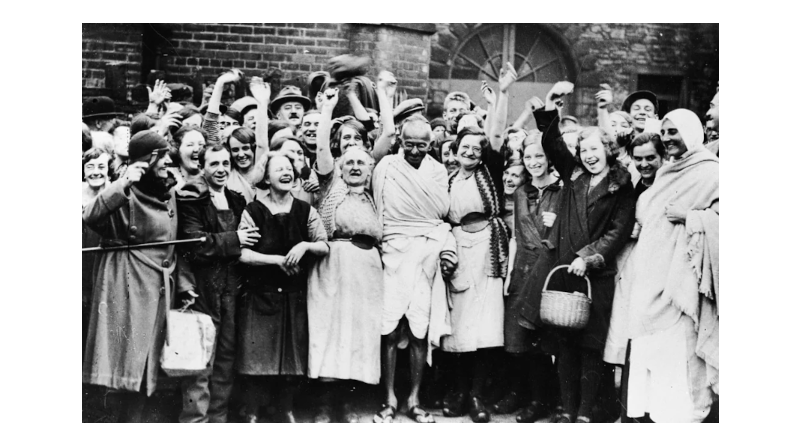
Gandhi in Britain
The Naga Skull represents the connection between Quakers and India, which includes the Society's friendship with Gandhi.
The bones that do not rest
Among the thousands of objects taken from colonised peoples and held in British museums are Naga ancestral remains in Oxford's Pitt Rivers Museum. Many are skulls taken during British colonial rule from the Naga homeland, which spans northeast India and Myanmar. For the Naga people, ancestors are not forgotten, with their bones are sacred, and their disturbance is a matter of deep grief.
Since 2020, Naga elders, researchers and community organisations have worked to bring their ancestors home. Quakers in Britain have supported the campaign, drawing on friendships formed through decades of peacebuilding among the Naga people.
Quaker witness in Northeast India
Those friendships were formed amid conflict over Naga self-determination following Indian independence. British Friend Horace Alexander visited the Naga Hills during the 1950s, and Marjorie Sykes joined peace missions in the 1960s.
The peace efforts did not settle the conflict, but the relationships endured. More recently, a small group of Friends has accompanied Naga civil society peacebuilders at their request. Their support for the return of ancestral remains reflects a Quaker understanding of peace that includes reconciliation and addressing historical injustice.
Quakers in India
The Quaker presence in India began long before the Naga conflict, with British and American Friends opening schools and undertaking medical and social work during the nineteenth century. Some also sought converts to Christianity.
At Hoshangabad in central India, Rachel Metcalf cared for orphaned children, while a centre at nearby Rasulia developed programmes in rural education, healthcare and agricultural improvement. During the famines of the 1890s, Friends also provided relief to thousands of people. Indian Friends gradually assumed more responsibility for such work, maintaining Quaker meetings and schools.
Such practical service reflected the Quaker belief that faith should shape everyday life, not simply religious worship.
Gandhi and the Quakers
Gandhi's first encounter with a Quaker took place in South Africa. In 1893, while working as a young lawyer in Pretoria, he met Michael Coates, a Friend, and discussed Christianity and religious belief with him.
Although Gandhi declined invitations to travel to the United States, he welcomed visits from American Friends. In December 1926, Rufus Jones met him at his ashram in Sabarmati.
When Gandhi visited Britain in 1931, he met Quakers including Horace Alexander and Mary Hughes, a social worker whose refuge helped people living in poverty in London's East End. Gandhi had specifically asked to meet Hughes. He also visited Friends House in London. Alexander became a close friend and an informal intermediary with British political leaders.
Gandhi was not a Quaker, but his commitment to conscience, truth and nonviolence reflected principles that Friends had long defended.
Continuing the witness
Quaker service in India did not end with independence. Friends continued to support education, community development and peacebuilding, increasingly through Indian-led initiatives.
The Naga-led repatriation campaign provides a contemporary example. Anthropologists including Dolly Kikon have worked with Naga elders, community organisations and museum staff to secure the return of their ancestors. In July 2026, the University of Oxford approved the return of 39 Naga ancestral remains. Arrangements for their journey home are still being made.
For the Naga people, the return is not simply a matter of moving bones between countries. It is a spiritual and communal process, recognising wrongs done under colonial rule. The bones are going home. And in their journey, there is witness.