
| | by admin | | posted on 19th March 2026 | Quakers Through the Ages | | views 104 | |
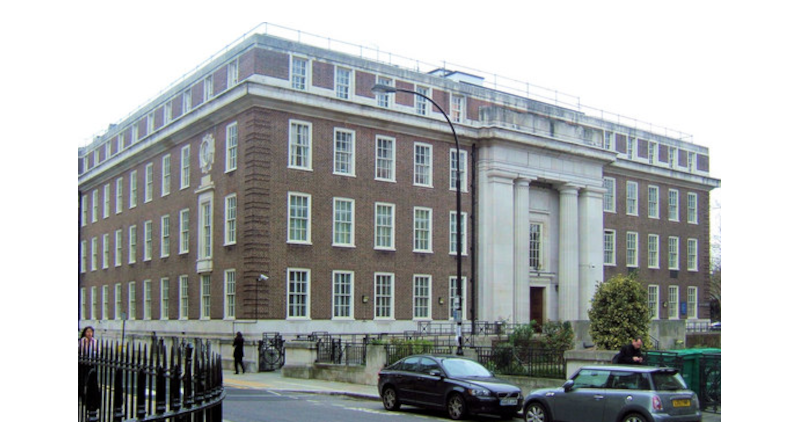
Friends House, London, is the central hub of Quaker life in Britain, a purpose-built headquarters completed in 1927 where a tradition rooted in silence takes institutional form.
Set on Euston Road opposite the constant motion of Euston Station, Friends House presents a calm, ordered face to the city. Built to replace an earlier Quaker centre, it is designed to bring together a growing national community under one roof. Inside are meeting rooms, offices, a library, and a large central space for Britain Yearly Meeting, where Quakers from across Britain gather to discern decisions collectively.
The building reflects its purpose. It is structured, deliberate, and quietly confident, designed not for spectacle but for use. Here, a community rooted in shared silence and inward reflection takes on outward form. A formal institutional building protecting a tradition that once resisted institutions.
That tension sits at the heart of Friends House. Early Quakers rejected hierarchy, refused imposed authority, and met wherever they could. Yet by the 20th century, the same movement required coordination, administration, and a place large enough to gather its members. The building does not resolve this contradiction. It preserves it.
At its centre is the main meeting space, created to hold large assemblies without losing the sense of collective equality that defines Quaker worship. There is no pulpit and no elevated platform of authority. Instead, the room is arranged to emphasise presence rather than performance, silence rather than instruction. Even at scale, hierarchy is held deliberately at bay.
Beyond the meeting space, the building extends into offices and archives. The Library of the Society of Friends holds material dating back to the 17th century, preserving records of persecution, reform, and witness. A movement once suspicious of structures now maintains one of the most significant archives of dissenting religious history in the world.
Outside, the garden adds another layer. A timeline embedded in the landscape traces the journey of Quakers from marginal outsiders to recognised voices in public life. A quiet narrative, set not in stone monuments but along a path, inviting reflection rather than proclamation.
Friends House is not simply a relic of the 1920s. It continues to function as a living centre for Quaker work, hosting gatherings, supporting campaigns, and providing a space where decisions are still made through collective discernment. Its role has expanded, but its underlying purpose remains consistent.
What makes the building distinctive is not its architecture alone, but the balance it maintains. It formalises a movement without fixing it in place. It provides structure without imposing authority, creating a centre that does not demand control.
In this, Friends House reflects a broader development within Quaker history. The same impulse that led earlier generations to challenge authority did not disappear. Instead, it adapted, finding ways to organise without losing sight of conscience. The result is a building that holds continuity and change together. It stands as evidence that a tradition rooted in inward freedom can take on outward form without surrendering its core.