| | by admin | | posted on 29th April 2026 | Individuals | | views 6 | |
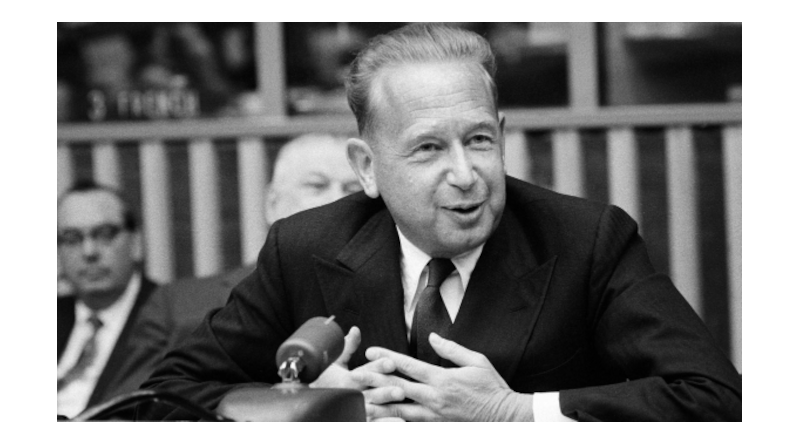
Dag Hammarskjöld (1905 - 1961) reshaped the United Nations into an active instrument of peace, defining diplomacy as the disciplined effort to prevent catastrophe.
Dag Hammarskjöld defined peace not as perfection, but as the disciplined effort to prevent catastrophe.
Dag Hammarskjöld became Secretary-General of the United Nations in 1953, when the organisation was still in its infancy, just four years old and still defining its purpose in a divided world. The position itself was uncertain. It had no clear tradition, no established authority, and no agreed limits. The United Nations existed, but what it could do, and how far it could act, remained open questions.
Hammarskjöld approached the role not as a political office, but as a form of service. Trained as an economist and shaped by a strong sense of public duty, he saw the Secretary-General not as a representative of national interests, but as an international civil servant, responsible to the idea of the United Nations itself. This distinction mattered. It allowed him to act with a degree of independence that would define his tenure, even as it drew criticism from those who preferred the organisation to remain passive.
Hammarskjöld understood from the outset that the United Nations would never be a perfect instrument. It was composed of states with competing interests, bound together not by trust but by necessity. Peace, in this context, could not mean harmony. It meant managing tension without allowing it to collapse into conflict.
“The United Nations was not created to bring us to heaven, but to save us from hell.”
This statement captures the realism at the centre of his thinking. The task was not to create an ideal world, but to prevent the worst outcomes in a flawed one. Peace was therefore an active condition, requiring constant attention. It depended not on agreement, but on restraint.
Under his leadership, the United Nations began to move beyond procedure towards action. It became a space where crises could be contained, where dialogue could be maintained, and where intervention, carefully calibrated, could prevent escalation.
One of Hammarskjöld's most significant contributions was the development of modern peacekeeping. During the Suez Crisis of 1956, the United Nations deployed an emergency force to stabilise the situation, marking a new phase in international cooperation. These forces were not designed to win wars. They were intended to hold space, physically and politically, so that conflict did not deepen.
This approach extended beyond military presence. Hammarskjöld practised what would later be called preventive diplomacy: quiet negotiation, undertaken away from public attention, aimed at reducing tension before it erupted. He travelled extensively, meeting leaders, mediating disputes, and maintaining channels of communication in situations where formal diplomacy had stalled.
Peace, in this model, was not dramatic. It did not announce itself. It was the work of slowing events down, of keeping lines open, of preventing the moment when conflict becomes irreversible.
These efforts took place under the constant pressure of the Cold War. The United Nations stood between two blocs, each suspicious of the other and wary of any independent authority. Hammarskjöld's attempts to expand the role of the organisation were therefore viewed with caution, and sometimes hostility, by both sides.
He was criticised for overstepping his mandate, accused of favouring one side or another, and at one point faced proposals that would have replaced his office with a three-part leadership structure designed to limit his influence. To act independently was to invite opposition.
Yet he continued to assert that the United Nations could not function if it merely reflected the divisions it was meant to address. It had to hold a position that was not identical with any single power. This required balance, but also resolve. Peace, again, was not neutrality. It was the maintenance of a space in which conflict could be managed.
Beneath his public work lay a more personal dimension. Hammarskjöld believed that the effort to sustain peace externally depended on a form of inner discipline. The ability to act with restraint, to listen, and to resist the certainty of one's own position was not simply a diplomatic skill, but a moral one.
“Our work for peace must begin within the private world of each of us.”
This perspective gave his work a distinctive tone. It was neither idealistic nor purely pragmatic. It recognised that institutions alone could not guarantee peace, but that without institutions, the effort to prevent conflict would lack structure. The task was to hold both: the external mechanisms of diplomacy and the internal discipline required to use them wisely.
In 1961, during the Congo Crisis, Hammarskjöld travelled to Africa in an effort to negotiate a ceasefire. His plane crashed en route, and he was killed. The circumstances of his death have been the subject of ongoing investigation, but what remains clear is that he died in the course of his work, engaged in the act of mediation.
“We are on dangerous ground if we believe we have a monopoly on rightness.”
Later that same year, he was awarded the Nobel Peace Prize. Yet his legacy does not rest on recognition alone. It lies in the shape he gave to the work of peace within an international system that remains incomplete.
The United Nations continues to operate within the limits he understood so clearly. It cannot eliminate conflict. It cannot resolve every division. But it can, at its best, prevent the descent into catastrophe.
Hammarskjöld's contribution was to define that task with precision. Peace is not the absence of tension, nor the achievement of agreement. It is the sustained effort to hold the world back from the edge.