
| | by admin | | posted on 10th April 2026 | Individuals | | views 14 | |
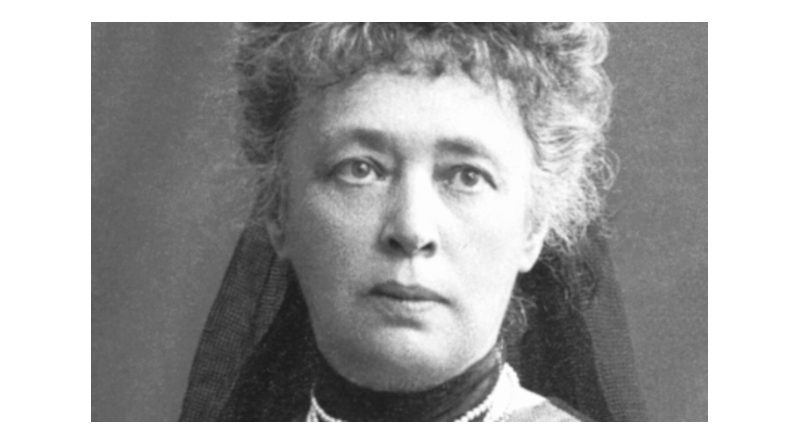
Bertha von Suttner (1843 - 1914) spent her life arguing that war was not inevitable, only accepted, and helped move peace from moral appeal towards organised international action.
Born in 1843 into the aristocratic world of the Austrian Empire, Bertha von Suttner entered a society where war was not simply tolerated but woven into identity. Military service carried prestige, conflict was framed as duty, and the great powers of Europe treated armed force as a normal instrument of policy. War was not usually presented as a failure. It was presented as necessity, honour and statecraft.
This was not an age that lacked intelligence, culture or technical progress. It was an age that had learned to live with contradiction. Industry expanded, science advanced and European elites spoke confidently of civilisation, yet war remained embedded in political life. That contradiction would become central to Suttner's thought. If civilisation meant human progress, how could it continue to depend upon organised slaughter?
Suttner's early life did not immediately set her against this world. Like many women of her class, she faced insecurity beneath the surface of status. Financial decline forced her into work as a governess, an experience that placed her in a curious position: close enough to elite society to understand its assumptions, but distant enough to see their fragility. That distance mattered. It helped turn observation into criticism.
What she began to question was not only war itself, but the habits of mind that made war seem permanent. Her great insight was that people are taught to accept war long before they are asked to fight it. Patriotism, ceremony, class culture and political rhetoric all helped to make violence appear natural. To challenge war, she realised, meant challenging the cultural agreement that sustained it.
“The idea of war is so ingrained in humanity that it seems almost impossible to dislodge it.”
That sentence goes to the heart of her life's work. She did not treat war as an unchangeable law of history. She treated it as an idea, and because it was an idea, she believed it could be opposed, unlearned and replaced.
In 1889, Suttner published Lay Down Your Arms!, the book that made her one of the best-known peace campaigners in Europe. It was not a treatise, manifesto or diplomatic study. It was a novel, and that choice was part of its force. Rather than arguing in abstract terms, Suttner showed readers what war did to human lives. She shifted the conversation from military glory and national prestige to bereavement, trauma and moral ruin.
Told through the life of a woman who endures repeated personal loss, the novel exposed what official language often concealed. War was not a pageant of flags and uniforms. It was death entering homes, futures being broken, and grief being normalised from one generation to the next. Suttner did not deny courage, but she refused to let courage excuse destruction. In doing so, she made the moral cost of war harder to ignore.
This was a major intervention in peace culture. Criticism of war already existed in religious, liberal and socialist traditions, but Suttner gave the subject a new emotional clarity. She brought the human consequences of war to the centre of the argument. Readers were not being asked merely to calculate whether war was efficient or prudent. They were being asked whether any civilised society should continue to accept such suffering as ordinary.
“Lay down your arms!”
The phrase became inseparable from her name because it carried both urgency and simplicity. It was not complicated. It was direct. That directness was part of its power. Suttner understood that peace language often becomes vague or sentimental. Her words did the opposite. They cut through habit. They named the act required.
The success of the book helped turn Suttner from a writer into an international public figure. She had shown that literature could do political work, not by issuing slogans alone, but by changing what people were able to feel and see. If war depended on acceptance, then the first task of peace writing was to make acceptance harder.
Suttner did not stop at moral appeal. She became one of the leading figures in the international peace movement, speaking at congresses, writing articles, building networks and arguing that peace required more than good intentions. If war was upheld by institutions, then peace would also need institutions of its own. This was one of her most important contributions. She helped move peace from feeling to framework.
Her programme centred on arbitration, international law and cooperation between states. These ideas are more familiar today than they were in the late 19th century, but at the time they represented a serious challenge to the assumption that nations must settle disputes through force or the threat of force. Suttner insisted that civilisation could not advance while political life remained trapped inside military logic.
Part of her wider significance lies in her connection with Alfred Nobel. Early in her career she briefly worked as his secretary in Paris, and although the arrangement was short-lived, the relationship continued through correspondence. Suttner repeatedly urged the case for organised peace work and for rewarding those who sought to reduce the likelihood of war. When the Nobel Peace Prize was later established, many observers saw her influence in its underlying idea.
In 1905, she became the first woman to receive the Nobel Peace Prize. The honour recognised her writing, her activism and her role in shaping the peace movement as an international cause. It also marked a larger shift. Peace was beginning to be treated not merely as an ethical wish, but as a serious public endeavour worthy of recognition, strategy and organised effort.
“After the verb 'to love,' 'to help' is the most beautiful verb in the world.”
That line captures the ethical warmth that sat beneath her political thinking. Suttner was not interested only in stopping war. She wanted to cultivate a culture in which human beings recognised mutual responsibility. Peace, in her work, was not passive. It was active, practical and built through forms of care, solidarity and law.
By the early 20th century, Suttner's arguments had gained real visibility. Peace congresses drew international participation, arbitration had entered mainstream discussion, and the possibility of organised cooperation between states no longer seemed absurd. Yet the world she criticised had not fundamentally changed. Militarism had not disappeared. It had modernised. Rival empires armed themselves more heavily, alliances hardened, and technological change made future wars more devastating than those of the past.
Suttner saw the danger clearly. Her warnings were not utopian predictions detached from reality. They were grounded in the political logic of her age. If governments continued to rely on force, and if populations continued to accept military preparation as normal, then catastrophe would follow. The tragedy was not that nobody had spoken. It was that the warning was heard and not fully acted upon.
She died in June 1914. Within weeks, Europe was at war.
The timing gives her life an almost unbearable historical sharpness. Suttner spent decades insisting that modern civilisation could not survive if it continued to organise itself around war, and then lived just long enough to see the crisis approaching. The First World War did not make her important, but it did expose how right she had been. War was not inevitable in the sense of being fated. It became inevitable when societies failed to challenge the beliefs, institutions and interests that kept it alive.
That is why Suttner still matters. She did not leave behind a single method in the style of Gandhi, nor a sweeping spiritual critique in the style of Tolstoy. Her contribution was different. She showed that peace had to become thinkable, speakable and buildable. She forced Europe to see that war was a human choice disguised as destiny. In doing so, she helped lay the moral and institutional groundwork for modern peace work.